Start an unforgettable journey through the Andes on the famous Inca Trail to Machu Picchu. This 4-day trek mixes history, natural beauty, and culture. It’s a dream trip for those who love adventure and history.
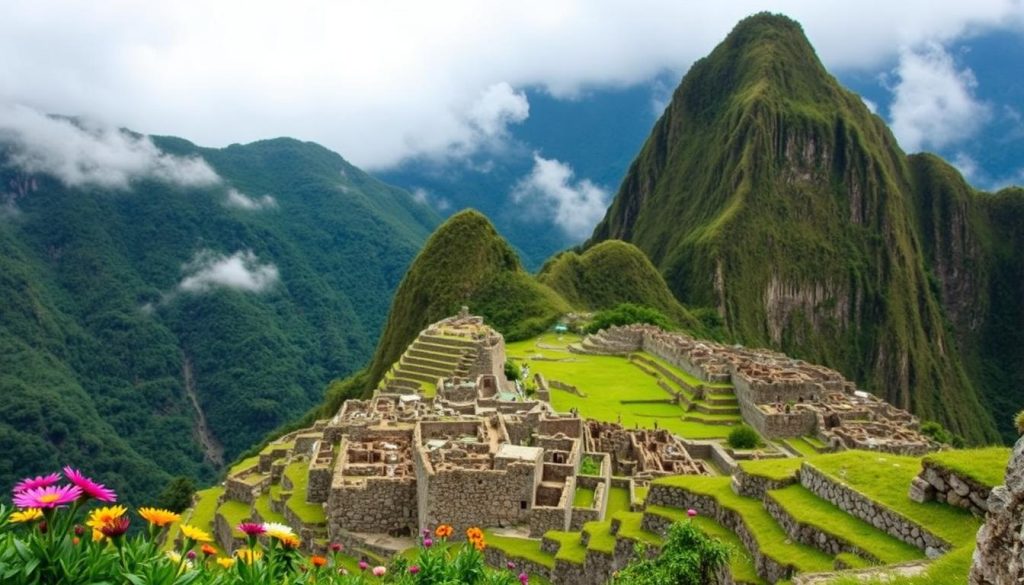
Travelers will see different landscapes, from high mountains to cloud forests. They’ll end at the Sun Gate, looking over Machu Picchu. This trek is a must-do for anyone wanting to see the Andes’ beauty and learn about the Inca heritage.
The Inca Trail is special because it’s only open to 500 people a day. This rule helps keep the trail pristine and offers a quiet experience. It has drawn travelers from everywhere, who come to see the Inca legacy and the Andes’ stunning views.
Key Takeaways
- The Inca Trail to Machu Picchu is a 4-day trek accompanied by 3 starter days of acclimatizing in Cusco and the Sacred Valley.
- The trek includes ascending 3 mountain passes, with Dead Woman’s Pass being the highest at 13,828 feet.
- The journey ends at the Sun Gate of Machu Picchu on the fourth day, offering a view of the Citadel at Golden Hour.
- The experience includes visits to significant Incan sites and interactions with local communities, providing a unique cultural immersion.
- The trek is strictly regulated, with a daily limit of 500 people to preserve the trail’s integrity and provide a more secluded experience.
Introduction to the Inca Trail Trek
The high-altitude hiking trails of the Andean mountain trails lead to Machu Picchu. This journey is a dream come true for many. The Inca Empire’s trails, over 25,000 miles long, have fascinated people for ages.
What Makes the Inca Trail Unique?
The Inca Trail is special because of its mix of history, nature, and culture. It takes you back in time, following the paths of the Inca. You’ll see ancient ruins, beautiful forests, and meet local communities.
A Brief History of the Trail
The Inca Trail was built in the 15th century. In 1911, Hiram Bingham rediscovered it, highlighting Machu Picchu. Now, it’s a UNESCO World Heritage Site, drawing thousands of trekkers each year.
| Inca Trail Trek Options | Distance | Duration | Highlights |
|---|---|---|---|
| Classic Inca Trail | 26 miles (42 km) | 4 days, 3 nights | Hiking over three high-altitude mountain passes, visiting Inca ruins like Wiñaywayna and Intipata |
| 4-day Traditional Inca Trail Hike | 33.7 miles | 4 days | Climbing Huayna Picchu before exploring Machu Picchu |
| 6-day Inca Trail Salkantay Trek | N/A | 6 days | Passing through the Incachiriasca Pass, the highest point at 4,850 meters |
Preparing for Your Trek
Starting the epic multi-day treks of the Inca Trail in Peruvian adventure travel needs careful planning. You’ll need the right gear and to be in good shape. This preparation is key for a great and safe trip.
Essential Gear and Packing Tips
Having the right gear is crucial for the Inca Trail. You’ll need sturdy hiking boots, warm clothes, and rain gear. A good sleeping bag for cold nights is also important. To carry less, consider hiring a porter for up to 7kg of your stuff.
Physical Fitness Requirements
The Inca Trail is tough, with high altitudes and tough terrain. Start by spending 2-3 days in Cusco to get used to the altitude. Train by doing cardio, walking hills, and climbing stairs with a backpack.
| Training Recommendation | Week 1 | Week 4 |
|---|---|---|
| Hiking Distance | 5-8 miles with 1,000-2,000 feet of elevation change | 7-9 miles with 2,000 feet of elevation change |
| Stair Climbing | 2 sets of 40 up and down, 20 sideways up and down per side | 2 sets of 70 up and down, 35 sideways up and down per side |
With the right preparation, you’ll be ready to tackle the Inca Trail. You’ll enjoy the amazing views and cultural experiences that make this trek unforgettable.
The Trekking Experience
Start an unforgettable journey through ancient Inca ruins and stunning Andean trails. The classic 4-day Inca Trail trek to Machu Picchu is a top 10 trek globally. It offers a deep cultural experience and breathtaking views at every step.
Daily Itineraries and What to Expect
The trek starts with a 14km hike on the first day. You’ll go from Km 82 to Ayapata campsite. The second day is the toughest, with a 16km hike and crossing Dead Woman’s Pass at 4,215m.
The third day is easier, with a 10km trek through cloud forests. The final day includes a pre-dawn hike to the Sun Gate. Here, you’ll see a stunning sunrise over Machu Picchu.
Stunning Sights Along the Way
As you trek, you’ll see remarkable Inca sites like Llactapata, Runkuraqay, and Phuyupatamarca. These ruins offer a glimpse into the Inca Empire’s rich culture. You’ll learn about their history and traditions.
You’ll have a personal porter for up to 15 lbs of your gear. This lets you enjoy the stunning landscapes without worry. You’ll have exclusive access to Inca sites, making your experience more intimate and enriching.
Daily Vistadome or 360 train departures add comfort to your journey.
| Trek Day | Distance | Duration |
|---|---|---|
| Day 1 | 14km | 6 hours |
| Day 2 | 16km | 10 hours |
| Day 3 | 10km | 6 hours |
| Day 4 | 6km | 2 hours |
With the right preparation and support, the Inca Trail trek is unforgettable. It lets you dive into ancient ruins and stunning Andean trails. Get ready for a journey that will leave you with lasting memories and a deeper love for Peru’s cultural heritage.
Accommodations on the Trail
Starting the inca trail trek to Machu Picchu means a cozy camping adventure. Tour operators give each pair of trekkers a four-person tent. This ensures everyone has room and privacy.
Campsites along the way have the basics. You’ll find dining tents and portable toilets. These meet the needs of the adventurous.
For a bit more luxury, some tours offer deluxe camping. These setups include bigger tents, comfy cots, and even private toilets. But, the true Inca Trail experience is about traditional camping.
Remember, there are no lodges or hotels on the Inca Trail. You can either camp or choose other routes like the Salkantay Trek. This trek offers lodge-to-lodge stays. It’s a more comfortable way to rest after a day of hiking.
Camping vs. Lodging Options
- Camping is the main choice on the Classic Inca Trail Trek, with top-notch tents from tour operators.
- Some tours offer deluxe camping with extra comforts like bigger tents and private toilets.
- The Salkantay Trek is a lodge-to-lodge option, providing more comfort along the way.
- The Classic Inca Trail doesn’t have lodges or hotels, so camping is the only choice.
Amenities You Can Expect
On the Inca Trail, you’ll find basic but good camping amenities. Expect:
- Four-person tents for every two trekkers
- Dining tents for meals
- Portable toilets at campsites
- Drinking water and snacks all day
- Help from porters and staff to set up and keep the campsite
Even though the accommodations are simple, the beauty of nature and the adventure make the Inca Trail unforgettable for outdoor lovers.
Food and Dining During the Trek
One of the best parts of the peruvian adventure travel on the inca trail trek is the food. Trekkers get to enjoy a wide range of delicious meals. These meals are made by skilled chefs who know how to keep hikers energized.
Typical Meals on the Inca Trail
Breakfasts are big and filling, with porridge, pancakes, and omelets. These meals give trekkers the energy they need for the day. Lunch and dinner offer tasty Peruvian dishes like ceviche, lomo saltado, and quinoa soup.
Snacks and drinks are available at rest stops. They include water, rehydrating drinks, fruits, cookies, and energy bars. These help keep trekkers energized and hydrated.
Dietary Restrictions and Options
- Most tour operators can handle different diets, like vegetarian, vegan, and gluten-free, if you tell them ahead of time.
- If you have food allergies or special needs, let your tour provider know early. They’ll make sure to meet your needs.
- The Inca Trail’s menus are designed to please everyone. They offer a variety of tasty dishes for all trekkers.
Whether you’re getting ready for a tough day or enjoying a meal, the food on the inca trail trek is a big part of the peruvian adventure travel experience.
Best Times to Trek the Inca Trail
Many travelers dream of hiking the Inca Trail to Machu Picchu. But when is the best time to do it? The answer depends on what you value most: good weather, fewer people, or getting a permit.
Weather Patterns and Their Impact
The Inca Trail’s weather changes with the seasons. The dry season, from May to September, is the best time to go. You’ll enjoy sunny days and cool temperatures.
The rainy season, from November to March, is wetter. February is the wettest month, and the trail is closed for maintenance then.
Peak Season Tips
- July and August are the busiest months. Permits sell out fast. Book your trek 6-8 months in advance.
- The shoulder seasons, April-May and September-October, have better weather and fewer people. Permits might be available with less notice.
- Solstice dates and holidays like Easter, Corpus Christi, and Inti Raymi are very popular. They sell out quickly.
| Month | Weather Conditions | Permit Availability |
|---|---|---|
| April-May | Dry and sunny | Good availability, 4-5 weeks in advance |
| June-August | Dry, cool nights | Highly competitive, book 6-8 months in advance |
| September-October | Slightly warmer, potential for rain | Better availability, 4-5 weeks in advance |
| November-March | Rainy season, trail closed in February | Limited availability, book early |
Choosing the right time for your machu picchu hike is crucial. Proper planning and early booking are key to securing your spot on this unforgettable peru trekking journey.

Guided Tours vs. Independent Trekking
Many travelers dream of hiking the Inca Trail to Machu Picchu. You can go alone or join a guided tour. Each option has its pros and cons, helping you choose the best for your adventure in Peru.
Guided Inca Trail Tours: Expertise and Convenience
Most people choose guided tours for the ease and knowledge they offer. Guides know the trail’s history and culture well. They also carry your bags, so you can enjoy the views.
Guided tours cost more, but they make the trip smooth. You won’t have to worry about anything.
Independent Inca Trail Trekking: Flexibility and Cost-Savings
Experienced hikers might prefer going alone. This way, you control your pace and plan. It’s cheaper, too, since you can pick your comforts.
But, you’ll handle all the planning and safety yourself. It’s a big responsibility.
Choosing the Right Inca Trail Adventure
Think about your experience, budget, and what you want before deciding. Companies like Intrepid Travel, G Adventures, and SAS Travel Peru have many options. Choose based on what you want from your trip.
| Guided Inca Trail Tours | Independent Inca Trail Trekking |
|---|---|
|
|
“Hiking the Inca Trail independently was one of the most rewarding experiences of my life. The sense of accomplishment and connection to the land was unparalleled.”
Whether you go with a guide or alone, the Inca Trail is unforgettable. With the right mindset, you’ll make memories that last a lifetime.
Cultural Insights Along the Journey
Walking the ancient Inca Trail to Machu Picchu in Peru is a deep dive into culture. Trekkers follow winding paths, meeting local Quechua communities. They learn about the community’s rich heritage.
Meeting Local Communities
On the trail, trekkers might see Quechua villagers weaving or farming. These moments offer a peek into their life, customs, and beliefs. Buying handcrafted souvenirs from artisans supports the local economy and keeps Inca traditions alive.
Understanding Inca Heritage
The Inca Trail is filled with ancient ruins, showing the Inca Empire’s engineering and spirituality. Guides share legends and history, making the Inca’s legacy come alive. The journey reveals the Inca’s respect for nature and their impressive stone work.
“The Inca Trail is not just a hike, but a journey through time, where the past and present converge to create an unforgettable experience.”
| Inca Trail Statistics | Details |
|---|---|
| Trail Length | Approximately 26 miles (43 km) |
| Highest Altitude | Warmiwañusca (Dead Woman’s Pass) at 13,800 feet (4,215 m) |
| Permits Issued Per Day | 500 (including guides and porters) |
| Best Trekking Season | Dry season from May to September |
Safety Considerations for Trekkers
Starting the high-altitude hiking of the Inca Trail trek to Machu Picchu needs careful planning and safety focus. Altitude sickness is a big worry, as the trail goes up to 4,215 meters (13,780 feet) high.
Altitude Sickness and Its Prevention
Altitude sickness, or soroche in Spanish, is common in Peru’s high places. To avoid it, spend a couple of nights in Cusco, at 3,300 meters (10,800 feet), before the trek. Drinking 4-5 liters of water daily on the trail is also key.
Ian Taylor Trekking offers first-aid kits and oxygen to help with altitude sickness. Their guides know how to spot and treat symptoms, keeping everyone safe.
Keeping Safe on the Trail
The Inca Trail is famous for its views, but it has risks. Watch out for steep dropoffs and uneven paths, especially in narrow spots. Wearing good hiking boots and being careful in tough areas helps.
Getting travel insurance that covers high-altitude treks is wise. It can help in medical emergencies or if you need to be airlifted out. With the right steps, you can enjoy the Inca Trail trek and see Machu Picchu safely.
“The Inca Trail is an intermediate trek, and it’s crucial to be physically prepared. Aim to train 4-5 times a week in the months leading up to your trek to ensure you’re ready for the challenge.”
Conclusion: Why You Should Experience the Inca Trail Trek
The Inca Trail trek to Machu Picchu is a life-changing adventure. It combines physical challenge, cultural immersion, and stunning natural beauty. This journey offers a unique look into the Inca heritage, letting you walk where they once did.
The Life-Changing Aspects of the Journey
Trekking the Inca Trail is an unforgettable experience. Seeing Machu Picchu from the Sun Gate is a moment you’ll always remember. It’s a chance to escape daily stress, connect with nature, and test your limits.
It’s a journey that pushes you to new heights. You’ll make memories that last a lifetime. And you’ll come back home with a new appreciation for our world.
Final Tips for a Memorable Experience
Before you start your Inca Trail trek, remember to respect the environment and local communities. Dive into the rich culture, talk to the locals, and enjoy the views. With the right gear, fitness, and adventure spirit, you’re set for an unforgettable trip.


